What six months of writing has told us
29 April 2026|Written by: Dream Chronicler
Six months ago this week we published our first analytical piece for the year. Ten posts later, the picture we have been building is more complete than it was, and the question at the centre of it has sharpened. This piece is about what we now think we are seeing, and where it leaves us.
The shape of the six months
The original intention, when we started publishing more actively in early November, was modest. We wanted to put some proper thinking about the New Zealand bedding market on our own site, in our own voice, dated and public, so the analysis we were already doing inside the business could be visible to the people we work with. That was it.
What has emerged across the ten posts is more than that. The posts, taken together, describe a market that is shifting in several directions at once. Not all of those directions agree with each other. Some cancel out. Some reinforce. Taking them seriously means accepting that the bedding business of 2026 is not a smaller version of the bedding business of 2016. It is a different business, with a different customer, a different channel mix, and a different cost picture. That recognition is where the writing has arrived.
The rest of this piece is an attempt to say plainly what that recognition consists of.
The customer has been changing faster than the range has
In November and again in late November we wrote about the customer the bedding industry is actually selling to in 2026. Younger on average than the customer of ten or fifteen years ago. More likely to be in a townhouse or an apartment than on a full section. More likely to be a Gen Y or Gen Z shopper who is renting, or buying a first home rather than a second or third. More likely to be researching on a phone before setting foot in a showroom. More likely to be in a household structure the housing stock was not designed for. More likely, when they do buy, to be a settlement stage buyer furnishing a home for the first time rather than replacing pieces from the last decade.
The point of those two posts was not to claim this customer is entirely new. It was to observe that the bedding range most retailers still run on their floors was built for an older customer, with a different home, a different buying journey, and a different set of assumptions about what a bedroom is for. Two weeks ago we described what we have been doing to close that gap on our side. The work is ongoing. The gap was larger than anyone wanted to admit six months ago.
The model is under more pressure than the surface numbers show
In March we revisited the Smiths City and Kitchen Things failures of the middle of 2025 with six months of hindsight. At the time, the public explanation for both was weak consumer demand. Six months on, the explanation looks different. The demand was softer than normal, yes, but it was not the demand that took those businesses down. The cost base was sized for a different volume of customer traffic than what was walking through the door, and the cost base could not come down fast enough to match. Margin was too thin to absorb the shock.
Two weeks after that, we wrote about a different version of the same problem playing out globally. Casper, Eve Sleep, Made.com, Noa Home all failed in the same window, roughly 2020 to 2024, and the public explanation for each was slightly different. Look at them together and the underlying pattern is the same as Smiths City and Kitchen Things, only mirrored. Both kinds of failure are cost structure failures, and both are channel alignment failures. The Smiths City version was a physical cost base misaligned with a customer who had moved online. The Casper version was an online acquisition cost base misaligned with a customer who wanted to touch the product. The structure of the mismatch is the same. Only the direction is different.
There is a second pattern worth naming, and this is where the deeper observation sits. When revenue softens, there is a common response inside retail that has been visible for a long time. Defend the price point rather than rebuild the offer. Close a few stores. Thin some stock. Protect the margin on what is left. In the short run it looks prudent. At scale it is something else. It is playing a smaller and smaller game.
The businesses that play that game for too long end up protecting price in one area while quietly losing relevance and volume in another. The margin looks fine on the quarterly report. The brand is shrinking anyway. This is the less visible failure mode that the last six months have brought into focus. It sits alongside the more visible failure mode we wrote about in March, where the opposite trap applies. We called it a race to the bottom there, and the description still fits. Cut prices to defend share, run out of margin before competitors do, lose on the economics before the market has a chance to deliver the volume. Both are traps. Both look like strategy for a while. Both are how a business ends up smaller than it started.
The current model still has real strengths
It would be possible to read the paragraphs above as a gradual case for replacing the existing retail model with something else. That is not what we think, and it is not what the writing has been saying.
Physical retail’s structural advantages are real, and we wrote about them plainly in December when the recovery was first visible, in early February when a four year pattern in the confidence numbers broke for the first time, and again later in February when we explained why the new website was built to support the showroom rather than replace it. The trust that comes from a customer being able to lie on the mattress before buying it. The expertise of a salesperson who has been fitting beds for fifteen years. The ability to resolve a warranty conversation in person rather than through a chat window. None of these is going away.
The hero products that have been the volume drivers of this industry for years have been getting investment too, not just the new additions. New ticking on a proven frame. Tighter edge support on a familiar mattress. Range extensions into colours the customer is now asking for. The point has never been to replace the range. It has been to keep each part of it answering the customer that each part was built for. The customer at the top of the pricing ladder and the customer at the entry level are different people, with different expectations, and a well built range gives both of them a credible answer. The range is not a ladder to be climbed. It is a map of the customers who might walk through the door.
Dreamland has been adapting on both cost and offer
On cost, in April we wrote, directly, that we are not asking the market to absorb our inefficiencies. The practical version of that statement is that we have taken cost out of our own structure over the last several years rather than building cost into our prices. Lean team. Warehouse sized to the ranges we run. Overheads kept to what a business of our shape actually needs, not what a larger version of it would carry. We held our pricing for nearly four years through a period when most of our input costs rose materially. That was only possible because the cost base we were holding pricing against was small enough to hold.
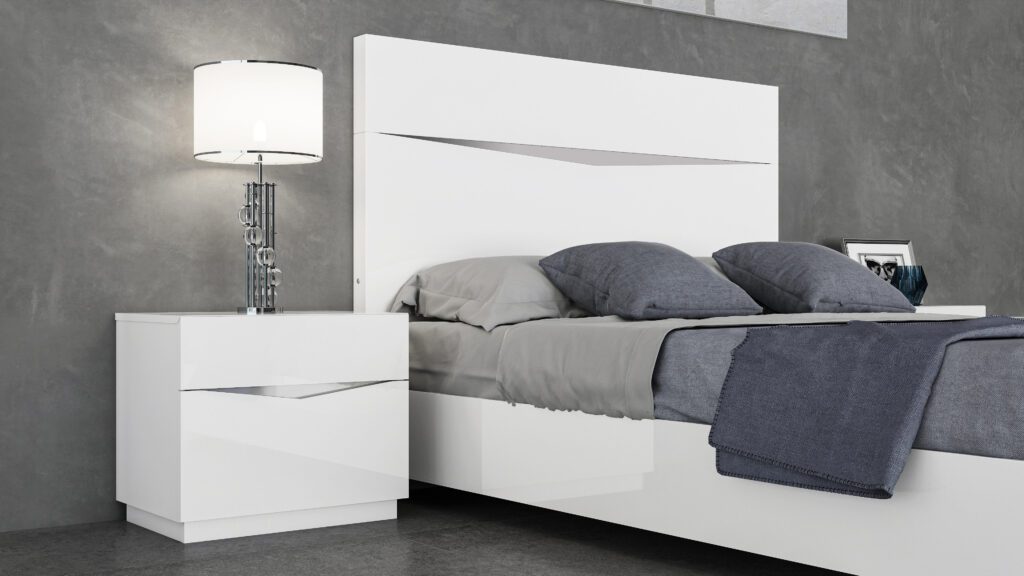
On the offer, two weeks ago we laid out what the range has been doing. Moving up at the top rather than down at the bottom, into the affordable luxury segment where the customer we are building for actually sits. Adding colour and finish options to hero frames rather than adding new frames for the sake of it. Introducing flat pack formats for customers in third floor apartments with no lift access. Bringing high gloss into the range for the first time. Keeping the classic ranges running in parallel for the customers they were built for.
What has not changed, and is not going to change
One thing has not moved across these six months and is not going to. The partnership channel that has been the spine of this business for thirteen years remains the spine of this business. Every decision described in the posts above has been made through the lens of how it strengthens that channel rather than weakens it. The new website is a front door to retailer showrooms. The range additions arrive at partner floors first. The cost discipline protects partner margins, not just ours. Nothing in the six months of writing above is a departure from the partnership. It is an investment in the partnership continuing to make sense to the customer the partnership is serving.
The question
Across the ten posts, one question has been asked repeatedly from different angles. We said it plainly in April. Is the model we have today the right one for the market we are moving into?
The answer we have arrived at is more complicated than a yes or a no. The model we have today is right for the customers it serves well. The question is whether there are customers it does not serve well, and what an answer to that might look like. The six months of writing above have not answered that question in full. They have sharpened it.
Closing
We don’t have all the answers. We have a clear set of questions, and a programme of work that is responding to them. Some of that work has been visible. The new site, the lifestyle photography, the Store Finder across every product page, the range adaptation, the cost discipline, this content programme. Some of it has been less visible. Some of it will become visible soon.