Where the New Zealand bedding market actually is, October 2025
5 November 2025|Written by: Dream Chronicler
A month ago the Reserve Bank cut the OCR by 50 basis points to 2.50%. In the same window, the Q2 GDP print came in at minus 0.9%, well below what most forecasters had expected. And in the same period, Smiths City, a 107 year old Christchurch retailer with nine stores, went from voluntary administration to liquidation, with creditors voting on 1 October to wind the business up entirely.
You don’t usually expect those three things to belong in the same paragraph. They do. And the connections between them are the most interesting story in New Zealand retail right now.
This is the first of what we intend to be a regular News & Updates thread. The aim is straightforward. We want to write down honestly what we are seeing in the market we work in, and what we think it means. Our trade partners have been receiving regular updates with the commercial detail since the middle of 2025. These pieces are the public companion. The same thinking, made visible.
Let me start with what the data actually says.
What the macro is telling us
The 50 basis point cut on 8 October was bigger than most people had penciled in even a fortnight before. The Reserve Bank had been moving in 25 basis point increments through most of 2025, and consensus heading into October was for another quarter point reduction. Then the Q2 GDP figure landed on 18 September. Minus 0.9% on the quarter, against a forecast of around minus 0.3%. The conversation changed quickly.
The size of the cut was the point. It signalled that the Reserve Bank now sees the recovery as needing more help than it had previously assumed. Wholesale interest rates fell sharply on the news. The major banks pre emptively dropped some short term rates ahead of the announcement and have continued trimming in the days since. Squirrel Mortgages noted recently that the best one year fixed rate is now 4.49%, with a path to 4.19% in the coming weeks if the market continues moving in the same direction.
What this means for households is real cash flow improvement, but it arrives in a particular way. Most New Zealand mortgages are fixed for one to two years, so the rate cuts only reach a household when their fixed term rolls over. A family who locked in at 6.8% in early 2024 is, in late 2025, just starting to see relief as their term comes up for renewal. The benefit of a rate cutting cycle is not felt evenly across all households at the same time. It arrives in monthly waves as terms expire.
Confidence is moving in roughly the right direction but slowly. The latest ANZ Roy Morgan Consumer Confidence reading came in at 92.4 for October, down slightly from 94.6 in September. The “good time to buy a major household item” indicator, which is the cleanest single read on whether households are ready to spend on furniture, appliances, and similar big ticket items, sits at minus 14. That indicator has not been positive in over four years. It is moving in the right direction, but it is moving slowly.
So the picture is this. Rate relief is real and arriving, and the early signals on the showroom floor are starting to follow. We had reports from a number of stockists of a noticeably busier weekend immediately after the 8 October cut. That is one weekend, in one window, and it does not yet show up in the official monthly data. But it is consistent with what we would expect to see when households who have been waiting for years finally get some of the cash flow relief they have been hoping for. The recovery is starting. It has not started for everyone, and it has not started evenly, but it is starting.
What Smiths City is telling us
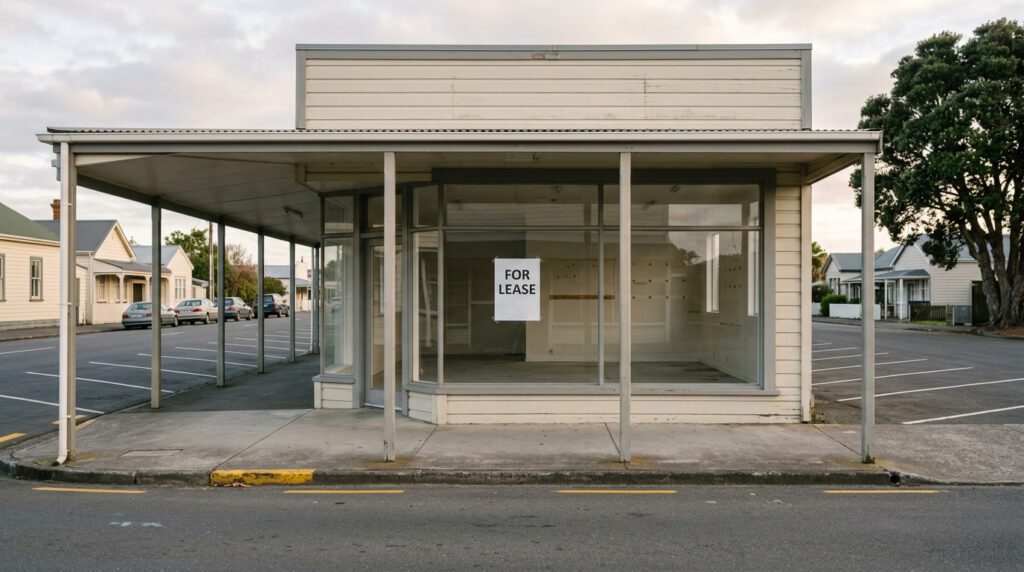
Smiths City was placed in voluntary administration on 2 September and formally liquidated by creditors on 1 October. The administrators’ first report listed liabilities of $26.8 million, with around 240 companies owed money and unsecured creditors expected to receive nothing. The eight remaining stores ran liquidation sales through September, with stock discounted up to 70% off the lowest in store ticketed price. By 14 September the last stores closed.
It is tempting to read this as a one off. An old company with too much fixed cost in the wrong locations, finally caught out by a hard year. There is some truth in that. But the more useful read, in our view, is the one Prime Minister Christopher Luxon offered on 1News the day of the administration announcement. He called it “a real shame” but added: “It’s a difficult time for retail, the combination of what’s transitioning to online shopping relative to bricks and mortar.”
That comment has stuck with us, because it names the longer pattern that Smiths City sits inside. Kitchen Things went into receivership on 20 August. Smiths City followed two weeks later. Neither was a marginal player. Both had been in business for decades. Both had been navigating the same conditions every NZ retailer has been navigating. They are the ones that did not make it through.
Two things are worth saying clearly about this. The first is that pure physical retail is under genuine pressure right now. That pressure is not going to ease just because the OCR is coming down. The second is that pure online retail is not immune either. The global pattern of bed in a box brands struggling, including Casper, Eve Sleep, Made.com and Noa Home, tells us that the answer the market has been working toward over the last five years is not “online wins”. It is more like “the businesses with both legs win”. Retailers with strong physical presence and a credible online layer. Suppliers who invest in both shopfront support and digital discoverability.
We will have more to say about this over the coming months, including a closer look at what the global D2C bed brands have learned the hard way. The short version is that the conditions that ended Smiths City and the conditions that ended Casper are not different conditions. They are the same conditions, expressed in different channels.
What this means for the rest of 2025
Looking forward to the next three months, through Labour Weekend, Black Friday, Christmas and into summer, we think the right read is cautious optimism with sharp execution.
Cautious because the consumer has not fully arrived. The “good time to buy” indicator at minus 14 says households are still hesitating. Retailers expecting an immediate rebound off the back of the OCR cut may find the rebound takes another quarter to materialise.
Optimistic because the structural setup for 2026 is genuinely strong. Rate cuts will continue feeding through. Mortgage rolls will keep arriving. The pent up demand for furniture and bedding that has built up over four years of deferred big ticket spending is real, and it does not stay deferred indefinitely. People who put off replacing the mattress in 2022 are still going to replace it. The question is when.
Sharp execution because in a market that is moving from cold to warm but not yet to hot, the stores and brands with their range freshened, their merchandising current, and their digital story coherent will pick up disproportionate share when consumers do start spending. We have introduced more new products in the last twelve months than in the previous five years combined. The Lincoln Precision7 upgrade, Havelock, Parnell in velvet, and the Tokoroa pine range arriving shortly are among them. Each of these introductions has been timed precisely for this moment, and the same logic applies more broadly across the industry. The brands that arrived ready for late 2025 will be in the strongest position when the recovery accelerates.
There is one further thing worth naming about the next three months. A major new furniture retailer is opening in Auckland in early December, and they will arrive with significant scale, sharp pricing, and a large national advertising spend. We are not in the business of predicting how that opening will play out. What we will say is that the consumer activity it generates, on its own, will be a useful test of how ready the recovery actually is. A market that responds strongly to a new entrant is a market in which the conditions are returning. A market that responds weakly is a market that still has more waiting to do.
What we will be writing about next
These pieces will be regular but not relentless. We aim to publish around every fortnight. Some will look at macro and industry data as it lands. Some will look at what Auckland’s housing shift means for how New Zealanders are sleeping. Some will look at what the global bed brands are learning. A few will look at how our own range is responding to all of it.
The aim is not to predict the next OCR move or call the bottom of consumer confidence. We are not in that game. The aim is to write down honestly what we see, in real time, so our trade partners and our own team and anyone else reading along can think alongside us.
The four year wait is not over. The recovery is real but uneven. The retail landscape is changing in ways that will look obvious in retrospect and are not quite obvious yet. We are going to keep paying attention, and we are going to keep writing it down.
Thank you for reading. More from us in the middle of November.
Sources cited: RBNZ Monetary Policy Review, 8 October 2025; Stats NZ Q2 2025 GDP release; ANZ Roy Morgan Consumer Confidence, October 2025; RNZ and 1News coverage of Smiths City voluntary administration and liquidation; Squirrel Mortgages OCR commentary, October 2025.