What Smiths City and Kitchen Things told us, six months on
4 March 2026|Written by: Dream Chronicler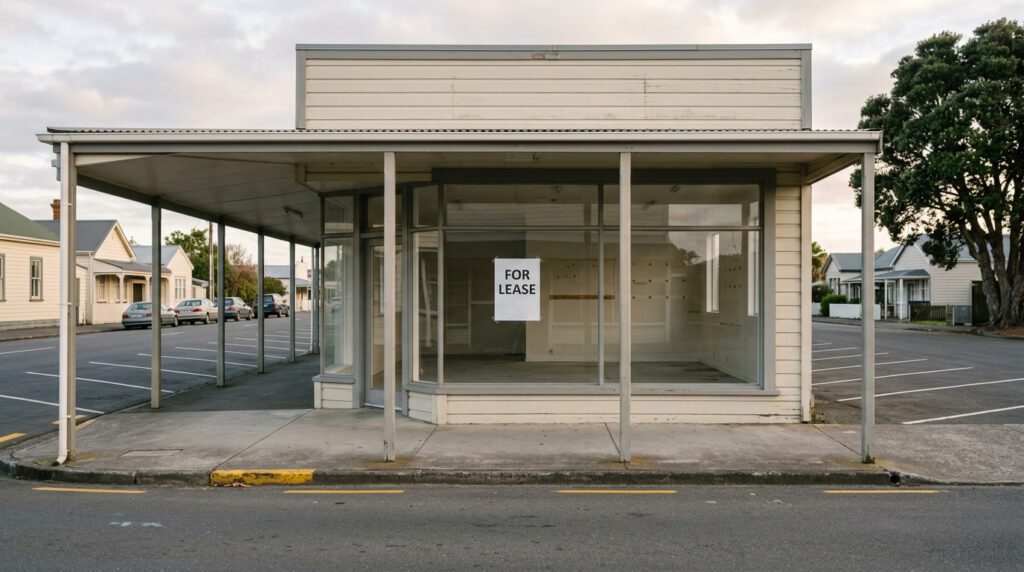
Six months ago, within a fortnight of each other, two of the better known names in New Zealand retail stopped trading. Kitchen Things went into receivership on Wednesday 20 August 2025. Smiths City followed into voluntary administration on Tuesday 2 September. Between them they ran more than twenty stores nationally, employed several hundred people, and had been in the New Zealand market for a combined 145 years.
At the time the headlines focused on weak consumer demand. That was the easy explanation, and it was true as far as it went. But six months is enough time to look back at both stories with the benefit of what the recovery data has since done. With that hindsight, the cause looks less like a demand failure and more like something structural. Both businesses were built for a market that no longer exists in the same shape it used to, and when conditions got hard, the structural problem stopped being something they could carry.
This piece is about what those two stories actually tell us, and what they do not.
Was the headline explanation right?
The day Smiths City went into voluntary administration, Prime Minister Christopher Luxon called it “a real shame” and added that retail was facing a difficult time, with what he described as the transition from bricks and mortar to online shopping. We quoted that line in November and said at the time that we thought it pointed at the longer pattern.
Six months on, the picture is more complicated than the Prime Minister’s framing suggested.
If the issue had been a simple bricks and mortar versus online story, then the recovery in consumer confidence we have seen since October would have eased the pressure on the businesses that survived. It has, in some places. In others, it has not. The January ANZ Roy Morgan reading hit 107.2 with the “good time to buy a major household item” indicator at plus one, the first positive print in over four years. We wrote about that a month ago and were careful to call it the start, not the arrival. The February reading, published last week, gave back most of January’s gain. The headline fell to 100.1 and the buying indicator went back into negative territory at minus four.
What the unwind tells us is that the recovery is being led by sentiment, and it is fragile rather than structural. The businesses that were already under pressure six months ago are mostly still under pressure now. The ones that did not make it through August and September would not have made it through February either, and probably not through April or June. The recovery did not, and was never going to, save them.
What actually went wrong
The Smiths City liquidator’s first report, published in October, listed total liabilities of $26.8 million. About 240 companies were owed money. Trade creditors alone were owed more than $10.7 million. The liquidators noted in plain language what the structural issue was: “the reduction in both sales and margin, combined with a high fixed-cost structure, made the company unprofitable.” Translated, that says three things had gone wrong at once. Sales had fallen. The margin per sale had narrowed. And the cost base required to keep the lights on had not been able to come down quickly enough to match.
The same description, with different numbers, applied to Kitchen Things. Both businesses had property leases, store payrolls, head office overheads, regional warehousing, point of sale systems, finance partner arrangements, a buying team, a marketing function. Each of those components made sense individually when the volume going through the business was higher and the margin per unit was wider. When both fell at the same time, the cost base became something the business was carrying rather than something the business was funded by.
This is the part of the story that does not show up neatly in a consumer confidence chart. A 5 point lift in the “good time to buy” indicator over a quarter is meaningful for retailers whose cost base is sized for current volume. It is not meaningful for retailers whose cost base was sized for the volume of three years ago. Those businesses needed either a much bigger lift in demand or a much faster restructure of cost. They got neither.
Where the bricks and mortar versus online framing falls short
There is a real story here about online and physical, but it is not the story the headlines told.
Pure physical retail is under genuine pressure. That is true. Store rents have not come down to match the share of customers who now start their bedroom or kitchen decisions on the internet, and the retailers carrying the largest physical footprints are the ones most exposed to that gap.
Pure online retail is under genuine pressure too. We touched on this back in November when we mentioned the global bed in a box brands struggling. The list has only grown since. The point we made then still stands: the answer the market has been working toward for the last five years is not “online wins”. It is closer to “the businesses that have functioning infrastructure for both halves of the customer journey win”.
Smiths City and Kitchen Things did not fail because they were physical rather than online. They failed because they had cost structures designed for a different version of their market and could not adjust those cost structures fast enough when the market shifted. A pure online competitor with the same proportional mismatch between its cost base and its actual demand would have failed in the same window for the same reasons. The channel is not the determining variable. The match between the cost base and the actual demand is.
What this means for the rest of the industry
Six months on, the lessons are clearer than they were at the time.
First, the businesses that survive a long downturn are the ones whose cost base can flex. That sounds obvious. It is not always easy to act on. A business with thirty year old leases, generational store managers, and decades of accumulated overhead does not restructure in six months. The advantage runs to businesses that built their cost base later and built it for a different market shape from the start.
Second, the customer journey runs across both the internet and the showroom now, and that is not going to reverse. Buyers discover, compare, and decide across both. The retailers and suppliers who take both halves of that journey seriously and build properly for it will outperform the ones who treat the internet as either a threat to be ignored or a substitute for the showroom to be raced toward. We wrote about how we think about that on our own side of the argument a fortnight ago.
Third, the recovery, when it arrives properly, will not arrive evenly. The sentiment readings will keep moving around. The businesses that get to take advantage of the eventual lift are the ones that are still standing when it does. Standing means margin discipline, range relevance, supply chain that delivers, and a customer offer that matches who is actually buying right now rather than who was buying ten years ago.
None of those three lessons are unique to bedding. They apply across consumer durables. The reason we are writing them down is that they apply to bedding more directly, and more visibly, than they apply to most other categories.
What is next
More from us in a fortnight. We will look at what the global bed brands learned the hard way through their own version of this story, and what the survivors did differently from the ones that did not survive.
Sources cited: RNZ coverage of Kitchen Things receivership, 20 August 2025; RNZ and Otago Daily Times coverage of Smiths City voluntary administration and subsequent liquidation, September and October 2025; BDO Christchurch liquidator’s first report on Smiths City Holdings (2020) Ltd, October 2025; ANZ Roy Morgan Consumer Confidence, January 2026 (released 30 January 2026) and February 2026 (released 27 February 2026).