Why bedrooms are becoming the room that has to do the most
12 November 2025|Written by: Dream Chronicler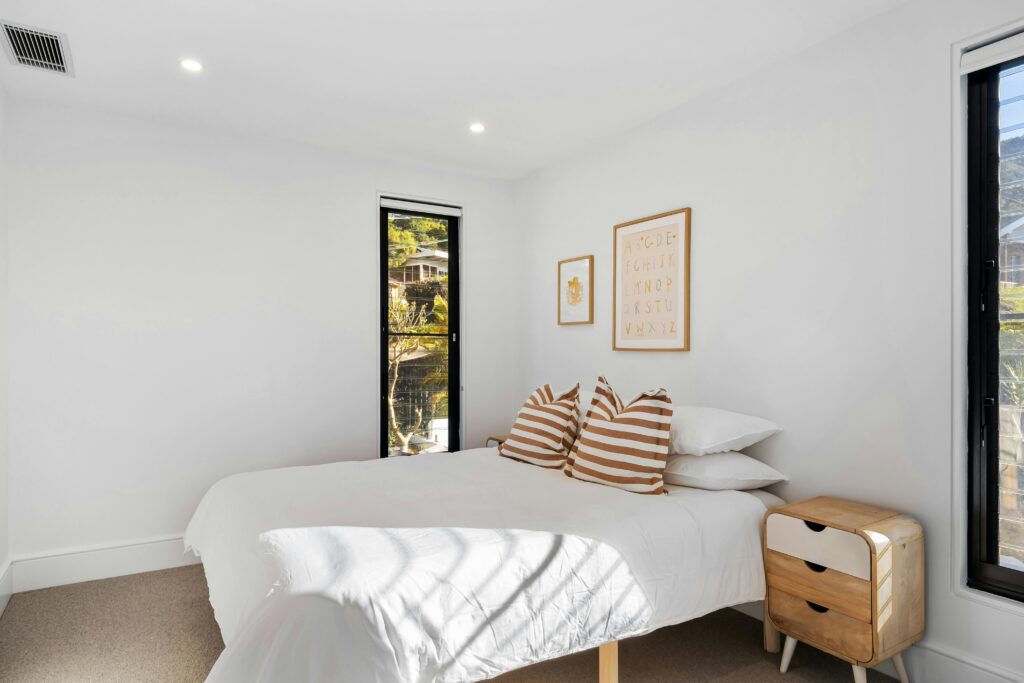
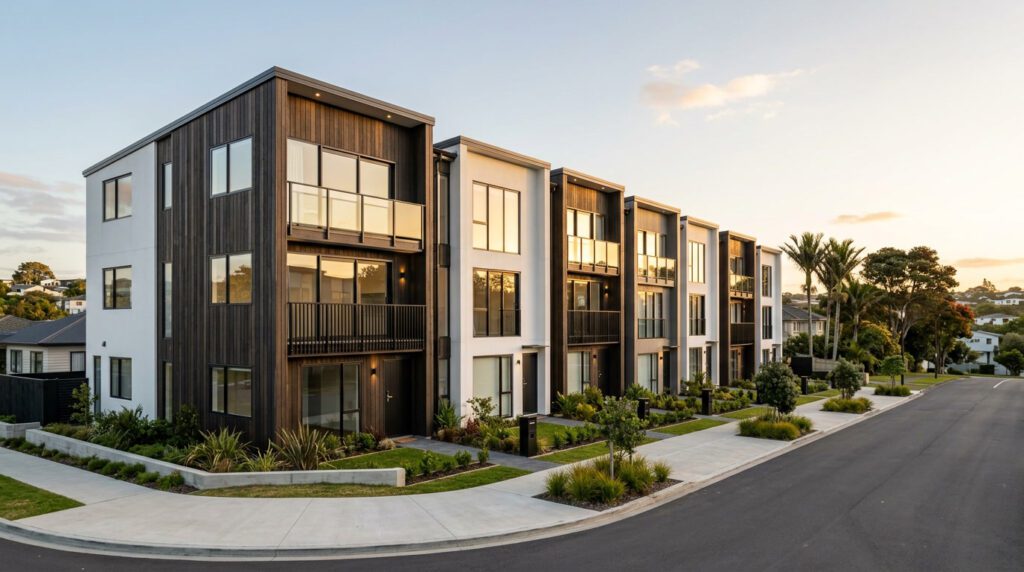
In the year to September 2025, Auckland councils issued consents for around 14,500 new dwellings. Just over half of them were not standalone houses. They were townhouses, terraced housing, retirement units, and apartments. The standalone family home, on a quarter acre section, with a garage and a back garden, has not been the dominant form of new build in Auckland for several years. It is becoming a smaller share each year.
This shift has been visible in the consenting data for at least five years. It is now visible in the streetscape of just about every Auckland suburb that has had even modest population growth. What is less often noticed is what it means for the room inside those new homes that has to do the most work for the people living there.
The bedroom.
Last week we looked at the macro picture for late 2025. This piece steps closer to home, literally, and asks what the new shape of the New Zealand house is doing to how New Zealanders sleep, store their things, host their guests, and quietly use the only private room they have.
There is a particular reason this question matters more in November 2025 than it did six months ago. In just over three weeks, IKEA opens its first New Zealand store at Sylvia Park. The world’s largest furniture retailer arrives in a market where the average new home is meaningfully smaller than the average new home of a decade ago, and where a significant share of the new construction is the small footprint, narrow stairway townhouse format that flat pack furniture is configured for. There will be a great deal of commentary about IKEA’s pricing and its product range over the next few months. The more interesting commentary, in our view, is about the kind of New Zealand home IKEA’s arrival is implicitly designed for. That home is being built, in volume, right now.
What the consenting data says
Stats NZ publishes building consents monthly. The Auckland numbers tell a clear story. In the early 2010s, around two thirds of new Auckland dwellings were standalone houses. By 2020 that had fallen to roughly half. In the year to September 2025 it sits below half, with townhouses and terraced housing now the largest single category of new consent.
The other number that matters is floor area. The median floor area of a new New Zealand dwelling has fallen meaningfully over the last decade. CoreLogic reported earlier this year that the median fell to 126 square metres in 2022, down approximately 10% on the previous year and the lowest reading since the late 1990s. New Auckland townhouses now average around 110 square metres. New apartments around 104.
Numbers in the abstract do not always land. So consider what these floor areas actually mean for the rooms inside.
A standalone three bedroom 1990s family home on a 600 square metre Auckland section typically gave each bedroom around 12 to 14 square metres, with separate dining, lounge, garage, laundry, and often a study or rumpus. The floor plan dedicated specific rooms to specific functions. Storage was distributed: garage, hall cupboards, linen press, wardrobes, sometimes an attic.
A new three bedroom Auckland townhouse on a 110 square metre footprint typically gives the master bedroom around 11 square metres and the secondary bedrooms around 8 to 9. Garage if any is integrated under the upper floor. There is no separate dining room. The lounge does the work of the lounge, the dining room and often the home office. There is no rumpus. The laundry is usually a cupboard. Hall cupboards barely exist.
The bedroom in the older home was a place to sleep. The bedroom in the new home has to be a place to sleep, store, sometimes work, sometimes study, and often host. The room is smaller and the demands on it are bigger.
One more thing is worth naming about the new compact home, because it changes the conversation further. The people most likely to be buying into these compact homes are younger New Zealanders earlier in their housing journey. First home buyers, renters, flatmates moving into a more permanent share, single professionals looking for their first one bedroom apartment. This cohort has grown up comfortable with the idea of discovering, comparing, and deciding on major purchases online. For Gen Y and Gen Z especially, walking into a physical store to try a bed before buying it is no longer the default step it was for their parents’ generation. That does not mean physical retail has stopped mattering. It means the path to the showroom often starts on a phone, and the expectations of how the range looks online are now the same expectations customers bring to the store itself.
What this changes about how the room is furnished
Once you start looking at bedrooms through this lens, you see specific consequences for how they get furnished.
Storage moves into the bed. In a townhouse with shallow wardrobes and no hall cupboard, a bed frame that includes lift up storage or drawers is not a nice extra. It becomes the primary storage solution for the room. The same bed footprint that used to give you nothing back is now expected to absorb the load that the missing wardrobe used to carry.
Shared rooms become more common. When the master bedroom is 11 square metres and the secondary bedrooms are 8 to 9, the secondary rooms cannot easily accommodate two single beds side by side. Bunks become more interesting again. Trundlers that disappear into the floor footprint of one bed become a serious option for siblings sharing a room or for the spare room that doubles as a guest room.
Mattress and base format matters more. A king or super king bed that arrives flat packed and goes through a 2.4 metre wide townhouse stairwell is a fundamentally different proposition from one that arrives fully assembled and needs a 3 metre lift. The bed in a box format, which most of the New Zealand industry has been ambivalent about for years, suddenly becomes more relevant for a meaningful slice of the market.
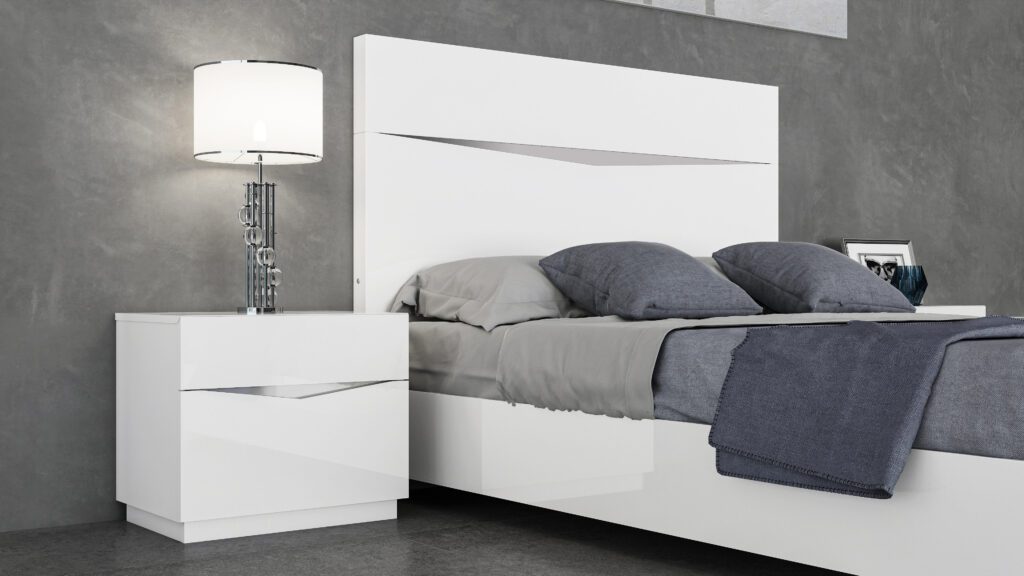
Headboard mounting matters more. In a small bedroom, a bolt on headboard that attaches to the bed base saves wall space compared to a wall mounted headboard. The wall behind the bed is often the only wall that does not have a wardrobe, a window or a doorway pressing against it. Anything mounted to that wall reduces flexibility.
These are not radical observations. Anyone who has worked the bedding floor in an Auckland furniture store over the last few years has seen the customer questions changing. The point of writing it down is that the changes are now structural, not anecdotal. The data and the showroom traffic are pointing in the same direction.
What is and is not changing
A few things to be careful about, because the easy version of this story is not quite right.
The shift is real but it is not universal. Standalone houses are still being built across New Zealand. Larger homes still sell. The classic Queen mattress on a Queen base with a tall upholstered headboard is still the single biggest selling configuration in our wholesale data. The point is not that traditional configurations are dying. The point is that an additional, growing slice of the market has different needs that the traditional configurations do not serve as well, and that slice is going to keep growing.
Auckland is leading the shift but it is not unique. Hamilton, Tauranga, Wellington, and Christchurch are all building meaningful volumes of medium density housing. The Auckland numbers are the most striking because Auckland is the largest market and the densification has been most visible there, but the same forces are working in other regions.
The other shift, less often discussed, is in buying mindset. A generation ago, buying a bed was a long horizon decision. You chose a mattress expecting to sleep on it for a decade. You chose a bed frame expecting to own it for longer. A growing share of today’s bedroom buyers are making a different kind of decision. They are renting, or expecting to move, or sharing, or simply more willing to refresh furniture over shorter cycles. They want the bed to do its job well now, without assuming now is forever. That does not mean they want worse products. It means they want well made products that match the life they are actually living, rather than the life their parents were living at the same age.
The shift has implications beyond bedding. Furniture, appliances, even the size of fridges and washing machines are starting to respond to smaller homes. We focus on bedding because it is what we know, but the broader picture matters because it tells us this is not a passing trend that retailers can wait out. It is structural. The houses that will be standing in Auckland in 2050 are being built now, and most of them are smaller than the ones their owners grew up in.
What we have been doing about it
Over the last twelve months, we have introduced more new products than in the previous five years combined. A meaningful share of those introductions has been a direct response to the shift this piece is describing. Our positioning across most of these products is what we have internally called affordable luxury. Well built, cleanly designed, considered detailing, without the price premium that traditional premium bedding carries. That positioning and the compact home shift turn out to be close cousins. Three of the recent product introductions show the logic in concrete form.
The Takapuna kitset base, launched in June, was designed for exactly the townhouse problem. A standard box base ships in a fully assembled carton that can struggle to make it up a 2.4 metre wide stairway and around a tight landing. The Takapuna ships flat. The flat pack footprint is around twenty percent of a standard box base, which means up to eighty percent freight savings between our warehouse and the store, between stores in a chain, and from the store to the customer’s home. More importantly for the customer, both the Takapuna base and a rolled mattress like our Chelsea now fit through any townhouse stairwell with room to spare. The customer can take both home in one trip and sleep on the new bed the same night. That last fact, more than the freight savings, is what changes the customer experience.
The Kaimai bed frame, in solid pine, was always our quiet workhorse. When we brought it back into stock in late July after a long supply gap, the framing for the relaunch was deliberate. Kaimai is a flat pack frame that fits up tight stairs, into hatchback boots, and into Airbnb storage cupboards without a scratch. It is not the bed someone buys for the master bedroom of their forever home. It is the bed someone buys when their requirement is “I need a real, proper, solid wood bed that I can actually get into the room I am putting it in.” That requirement is more common in a townhouse market than it was in a 1990s family home market.
The Havelock trundler, launched in early September, is the textbook example of one footprint doing three jobs. It is a king single bed with a popup single trundler underneath. It can be configured three ways: together as a wider bed, separately as two singles, or with the trundler left low. One product. Three room configurations. Suited equally to a teenager’s room that occasionally needs to host a sibling, a guest room that occasionally hosts two adults, and an Airbnb that needs to flex between solo travellers and couples. The Havelock has been our strongest new product launch of 2025 by a meaningful margin, and we think the reason is that it solves a problem the traditional product set was not solving well.
The Tokoroa pine range has been on our shelves since July as the newer sibling to Kaimai. We will be giving it a proper introduction to trade partners and consumers in the coming weeks. Tokoroa carries the same flat pack practicality as Kaimai with a more contemporary full panel headboard. The timing of the wider introduction is deliberate. December is a moment when households with smaller rooms are looking hard at how to make them work harder, and Tokoroa is built for that conversation.
The point of naming these four products is not the products themselves. The point is the logic behind them. Each of them was designed with a specific compact home or constrained delivery problem in mind. Each of them is in market, on shelves now or being more actively promoted in the coming weeks. The range adaptation is not a future plan. It is what we have been doing throughout 2025.
What is next
More from us in a fortnight, around the time of the next OCR decision. We will look at where consumer confidence is sitting heading into the Christmas period, and at what the broader shape of the New Zealand household is doing to how all of us in this industry should be thinking about the year ahead.
Thank you for reading.
Sources cited: Stats NZ Building Consents Issued, year to September 2025 release; CoreLogic NZ commentary on median dwelling floor area, 2024; Auckland Council monthly consents data; IKEA Sylvia Park opening, December 2025.