
What age can a child use a bunk bed? A New Zealand guide
In New Zealand, bunk beds are generally recommended only for children aged nine and over for the top bunk, with younger children sleeping on the bottom: the right age is really about coordination and following a few simple rules, not just a birthday, and this guide covers the age guidance, the signs a child is ready, and how to introduce a bunk safely.
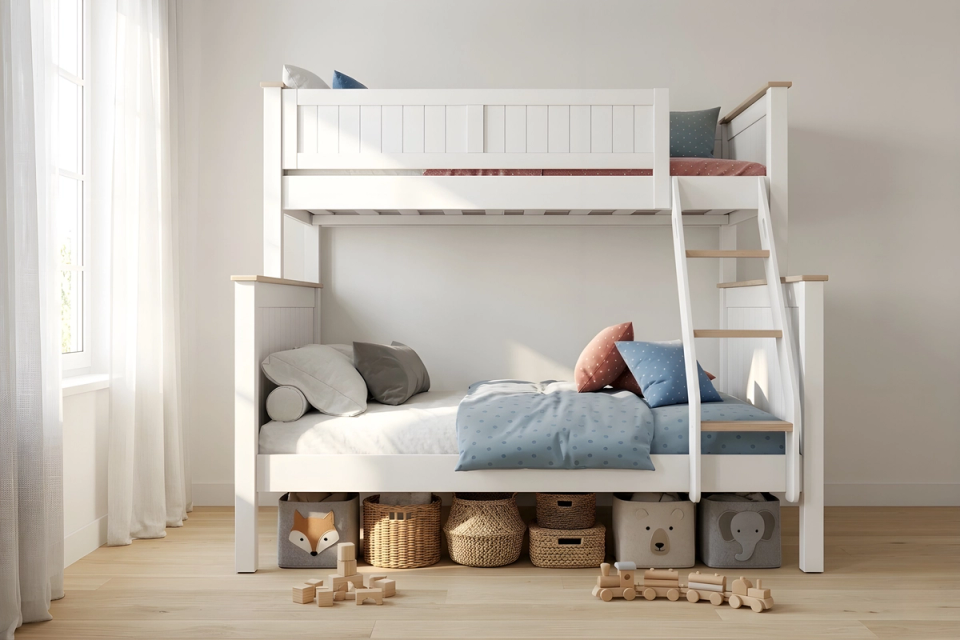
Bunks are one of the best space savers in a family home, and also the bed parents worry about most. The good news is that the age question has a clear, sensible answer, and once you know it the rest is straightforward.
The age guidance in New Zealand
Product Safety New Zealand advises that bunk beds are not suitable for children under nine years of age, and that younger children should not sleep on the top bunk[1]. This is not about height or bravado. It is developmental: younger children do not yet have the coordination and judgement to use a ladder and an elevated bed safely, and falls from the top bunk are the most common bunk injury[1]. The bottom bunk is fine for younger children; it is the top bunk and the ladder that carry the risk.
Nine and over
Source: Sleep safety: cots, bunk beds and baby slings, Product Safety New Zealand
It is about readiness, not just a birthday
Nine is the general guide, but children vary, so watch for readiness alongside age. A child who is ready can climb the ladder confidently and calmly, remembers and follows the rules without constant reminders, and understands that the top bunk is for sleeping, not playing[1]. A child who still climbs impulsively, forgets the rules, or treats the bunk as a fort is telling you to wait, whatever their age.
For younger children: the bottom bunk, or wait
If your children are under nine, you have two good options. Put the younger child on the bottom bunk and keep the top for an older sibling who meets the age guide, or choose a single or a trundle until everyone is ready. A single over double layout can suit this: the roomy bottom bunk works for a younger child (or a parent settling them in), while the single top is there for an older child when the time comes.
How to introduce a bunk safely
- Start on the bottom bunk so the child gets used to the bed itself first.
- Practise the ladder together in daylight, up and down, until it is second nature.
- Set the house rules on day one, before the novelty wears off.
- Add a night light so the ladder is easy to see for trips during the night.
House rules that stick
- The top bunk is for sleeping, not playing or jumping.
- One child on the top bunk at a time.
- No child under nine on the top bunk, even for a game.
- Feet first, facing the ladder, coming down.
How Dreamland bunks fit in
Dreamland’s two bunks, Charlie and Tyler, are built and tested to the AS/NZS 4220 safety standard, with independent third party test reports held on file, so the structure, guardrails and ladder are designed for safe use once your child is the right age. For the full checklist, see Bunk bed safety: the New Zealand parent’s checklist, and browse the kids beds and bunks range or find your nearest stockist.
The short version
- Top bunks generally suit children nine and over; younger children use the bottom bunk only.
- Judge readiness too: confident on the ladder, follows the rules, treats the top as a bed.
- Introduce it gradually, practise the ladder, and set the house rules early.
- A single over double bunk lets a younger child take the bottom while an older sibling takes the top.
Good to know
- What age can a child sleep on the top bunk?
- Generally nine and over, according to Product Safety New Zealand. Under nine, children should use the bottom bunk only, because top bunk falls are the most common bunk injury and younger children are still developing the coordination to use a ladder safely.
- Can a younger child use the bottom bunk?
- Yes. The bottom bunk is suitable for younger children. It is the top bunk and ladder that carry the age guidance.
- How do I know my child is ready for the top bunk?
- They climb the ladder confidently and calmly, follow the rules without constant reminders, and understand the top bunk is for sleeping. If they still climb impulsively or treat it as a fort, wait.
- Are Dreamland bunks safe for the recommended age?
- Dreamland’s two bunks, Charlie and Tyler, are built and tested to AS/NZS 4220. The standard covers the design; the age guide and house rules cover safe use.
References
- [1] Sleep safety: cots, bunk beds and baby slings, Product Safety New Zealand The under-nine guidance, top-bunk fall risk, and the developmental reasoning.
- [2] Bunk bed safety, Kiwi Families Practical readiness and supervision advice for bunks.
- [3] Making your child’s bedroom safe, Whānau Āwhina Plunket General bedroom setup safety around elevated beds.
Researched and drafted with AI assistance, reviewed and fact checked by a named human.