Sprint faster: how 90 minutes extra sleep adds 4% speed
22 December 2025|Written by: Dream Chronicler
You buy the carbon plated shoes. You track your macronutrients down to the gram. You spend hundreds on supplements and recovery tools that promise to give you an edge. But what if the most potent performance enhancer available to you was completely free?
It does not require a prescription. It is 100% legal. And the science says it works better than almost any gadget you can buy.
We are talking about sleep extension.
For years, coaches told athletes to “get a good night’s rest” before a big game. It was vague advice. But recent research has put hard numbers behind that sentiment. We now know that treating sleep as an active part of your training program, rather than just passive downtime, can result in massive performance gains.
Specifically, adding around 90 minutes to your time in bed can make you significantly faster.
If you are a runner, a CrossFitter, or a team sport athlete looking to shave seconds off your time and improve your reaction speed, you need to understand the mechanics of sleep extension. Here is how staying in bed a little longer can scientifically upgrade your athletic performance.
The Stanford Basketball Study
In the world of sports science, one study stands out as a landmark for understanding the relationship between sleep volume and athletic output. Conducted by Cheri Mah and her colleagues at Stanford University, the research focused on the Stanford men’s varsity basketball team.
These were elite athletes. They were young, fit, and training at a high level. But like most university students and busy adults, they had accumulated a significant “sleep debt.” They were functioning, but they were not optimised.
The researchers set up a protocol to see what would happen if they forced these athletes to saturate their systems with sleep.
The Protocol
For the first few weeks, the researchers simply measured the athletes’ baseline performance while they kept their normal sleep schedules. They recorded sprint times, shooting accuracy, and reaction times.
Then came the sleep extension phase. For five to seven weeks, the players were instructed to obtain as much nocturnal sleep as possible. The goal was a minimum of 10 hours in bed each night.
This was a massive shift. On average, the players increased their total sleep time by about 110 minutes per night. They went from sleeping under 7 hours to nearly 8.5 hours of actual sleep.
The Results
The improvements were not marginal. They were game changing.
Sprint Speed: The players ran a 282 foot (86 metre) sprint significantly faster. Their times dropped from an average of 16.2 seconds to 15.5 seconds. That is a 0.7 second improvement. In the world of sprinting and court sports, a 4.3% improvement is the difference between winning a gold medal and not making the final. It is the difference between getting past a defender or getting blocked.
Shooting Accuracy: It wasn’t just raw physical speed that improved. Fine motor skills saw a massive boost. Free throw percentage increased by 9% and three point field goal percentage increased by 9.2%.
Reaction Time: Psychomotor vigilance tasks showed that the athletes reacted faster and sustained attention better after the sleep extension period.
Mood and Vigor: The athletes reported feeling less fatigue and more vigor. This is crucial because how you feel dictates how hard you can push in training.
The takeaway is clear. The athletes did not train harder during this period. They simply slept more. By clearing their sleep debt and extending their time in bed, they unlocked physical potential that was previously suppressed by fatigue.
Why Sleep Makes You Faster
You might be wondering how lying still for longer translates to moving faster. The answer lies in your hormones and your nervous system. Sleep is not a uniform state of rest. It is a complex physiological process where your body repairs tissue and upgrades your brain.
When you extend your sleep, specifically aiming for that 90 minute increase, you are likely allowing your body to complete more sleep cycles. This has two primary benefits for speed and power.
1. The Growth Hormone Pulse
Deep sleep, also known as Slow Wave Sleep (SWS), is physically restorative. This stage of sleep usually happens in the first half of the night. During this phase, your pituitary gland releases a pulse of Human Growth Hormone (HGH).
HGH is essential for muscle repair. It stimulates tissue growth and helps repair the micro tears you create during heavy lifting or sprint intervals.
If you chronically cut your sleep short or have fragmented sleep, you may disturb these deep sleep cycles. By extending your time in bed, you ensure your body has ample opportunity to settle into deep sleep and release the hormones required to rebuild your fast twitch muscle fibres. A repaired muscle is a responsive muscle.
2. Neuromuscular Firing
Speed is not just about muscle size. It is about how fast your brain can tell your muscles to contract. This is the neuromuscular connection.
Sleep deprivation slows down neural transmission. It is like trying to download a large file on a bad WiFi connection. The signal gets through, but it lags. In a sprint, that lag manifests as slower ground contact times and reduced explosiveness.
The Stanford study showed improvements in reaction time, which suggests that a well rested nervous system fires more efficiently. When you are fully rested, the signal from brain to muscle is crisp and instant. This allows for better coordination and maximum power output with every stride.
Time in Bed vs. Actual Sleep
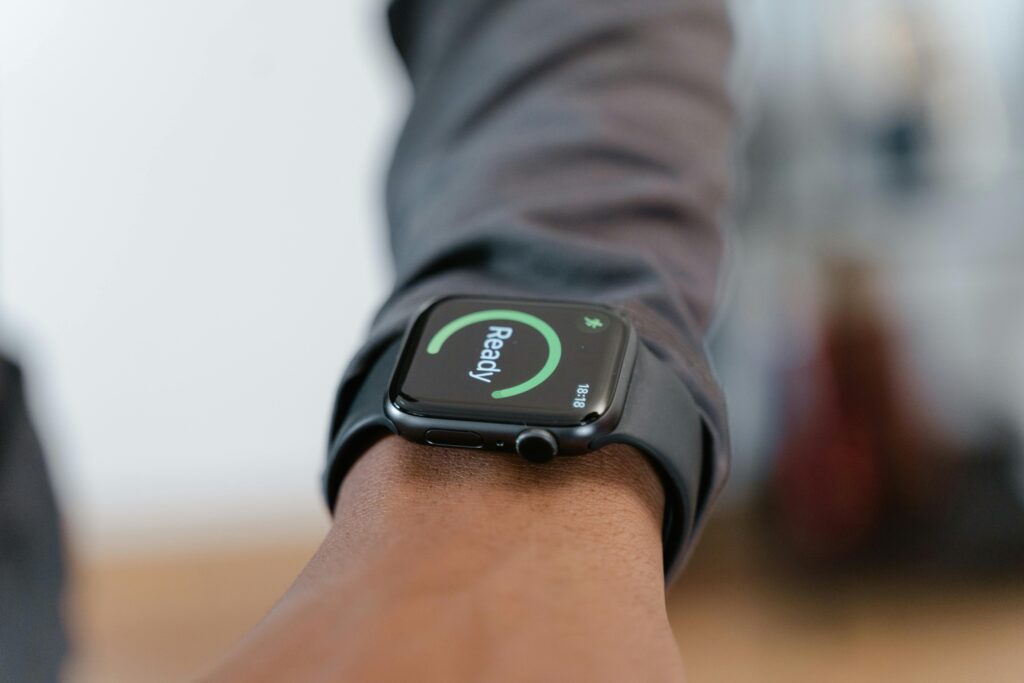
If you wear a tracker like a Garmin, WHOOP, or Oura Ring, you have probably noticed a metric called “Time in Bed” versus “Total Sleep Time.”
This distinction is critical for athletes.
In the Stanford study, the goal was 10 hours in bed. The result was about 8.5 hours of sleep.
Human beings are not robots. You do not fall asleep the second your head hits the pillow. You spend time falling asleep (latency) and you likely have micro wake ups throughout the night that you don’t even remember.
If you set your alarm for exactly 8 hours after you go to bed, you might only be getting 7 hours or less of actual sleep. To get the performance benefits of 8 to 9 hours of sleep, you need to budget for 9 to 10 hours in bed.
This is the “buffer zone.”
If you want to replicate the results of the 4% sprint improvement, you cannot just aim for a sleep number. You need to focus on extending your time in bed. This takes the pressure off “trying” to sleep. You simply commit to being in your sanctuary, lights out, for a longer window.
The Mental Game: Perceived Exertion
There is another hidden benefit to sleep extension that affects your speed. It lowers your Rate of Perceived Exertion (RPE).
RPE is how hard a workout feels. When you are sleep deprived, running at a 5:00/km pace might feel like an 8 out of 10 effort. When you are fully banked on sleep, that same pace might feel like a 6 out of 10.
If a pace feels easier, you can sustain it for longer, or you can push harder to reach a new top speed. The Stanford athletes reported increased vigor and improved mental well being. They felt ready to perform.
In high intensity sports, confidence and mental sharpness are just as important as physical capacity. Sleep protects the athlete’s mindset. It reduces irritability and the stress response, allowing you to stay composed under pressure.
Practical Ways to Add 90 Minutes
For a professional student athlete, finding 10 hours a night is hard. For a busy adult with a job and family, it might feel impossible. But you do not need to be perfect to see progress. Even a 30 to 60 minute extension can yield results.
Here is how to structure your life to get more time in bed without quitting your job.
1. Sleep Banking Before Events
If you cannot sleep 10 hours every night, prioritize it in the weeks leading up to a competition. This is called “sleep banking.” Research suggests that extending sleep for a week or two before a race or game can build a buffer against the inevitable poor sleep you might get the night before the event.
Think of it like carb loading, but for your nervous system.
2. The “No Tech” Wind Down
One of the biggest thieves of sleep time is “revenge bedtime procrastination.” This is when you stay up scrolling through your phone because you feel like you haven’t had enough free time during the day.
The blue light from screens suppresses melatonin, the hormone that signals your body it is time to sleep. This pushes your sleep onset later, eating into your time in bed.
Try the “3 2 1” routine mentioned in our knowledge base:
3 hours before bed: Finish dinner.
2 hours before bed: Stop work.
1 hour before bed: Screens off and lights low.
By reclaiming that hour of scrolling, you gain an hour of potential recovery.
3. Optimise Your Sleep Environment
If you are going to spend more time in bed, that environment needs to be conducive to rest. You want a “sleep cave.”
Temperature: Keep your room cool. Around 18°C is ideal for most athletes. Your core body temperature needs to drop to initiate sleep.
Darkness: Use blackout curtains. Even a small amount of light can disrupt deep sleep cycles.
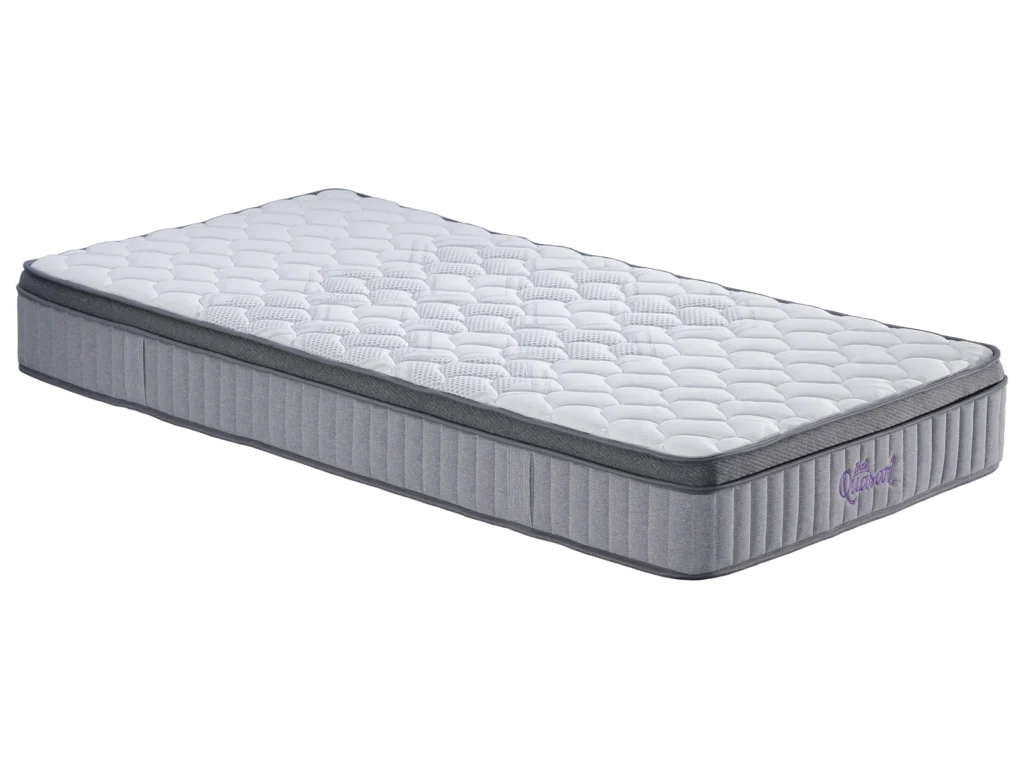
Support: You cannot recover if you are fighting your mattress. If your bed is sagging or too soft, your muscles stay active trying to support your spine. A quality mattress with proper zoning allows your muscles to fully switch off. At Dreamland, we design our mattresses with high density foams and reinforced spring systems specifically to support the recovery needs of active bodies.
4. Respect Your Chronotype
Some people are night owls; others are early birds. While work schedules often dictate when we wake up, try to align your sleep extension with your natural rhythm where possible. If you are naturally tired at 9:30 PM, do not force yourself to stay up until 11:00 PM. Go to bed. Catch that early wave of sleep pressure.
Measuring What Matters
You can’t manage what you don’t measure. If you are serious about getting faster, you likely track your splits and your weights. You should track your sleep with the same discipline.
Do not obsess over every single “sleep stage” graph, as consumer wearables are not always 100% accurate on stages. Instead, look at the big picture trends.
Total Time in Bed: Are you giving yourself enough opportunity?
Resting Heart Rate (RHR): Is it trending down? A lower RHR overnight usually indicates good recovery.
Heart Rate Variability (HRV): Is it stable or trending up? This measures your nervous system’s readiness to train.
If you see your Time in Bed go up and your sprint times go down, you know the protocol is working.
The “Minimum Effective Dose” Challenge
You might not be able to commit to 10 hours in bed for 7 weeks like the Stanford athletes. But you can try a micro experiment.
For the next 7 days, try to add just 45 to 60 minutes to your sleep opportunity. Go to bed 30 minutes earlier and wake up 30 minutes later, or simply get in bed 60 minutes earlier.
Treat this week as a training block.
- Baseline: Test a short sprint (e.g., 40 metres or similar to the 282 ft test) today.
- Extension: Commit to the extra sleep for one week.
- Retest: Run the sprint again next week.
You might be surprised by how much “free speed” you unlock.
Conclusion
We often look for complex solutions to our performance plateaus. We change our programming, we change our diet, and we buy new gear. But the biological foundation of performance is recovery.
The research is clear. Sleep extension is a potent tool for improving speed, accuracy, and reaction time. The 4% improvement seen in the Stanford study is a massive margin in competitive sports.
It requires discipline to turn the lights out early. It requires saying no to the next episode on Netflix. But if you want to see what your body is truly capable of, you need to give it the time it needs to rebuild.
Start tonight. Track your time in bed. Aim for that extra 90 minutes. Your personal best is waiting for you in your dreams.