Jet lag is not just fatigue: it is a performance killer
14 January 2026|Written by: Dream Chronicler
You have booked the flight and packed your gear. You are ready to compete or train in a new location. But there is one opponent you cannot outrun with speed or strength alone. It is biology.
Crossing multiple time zones does more than make you feel groggy. It fundamentally disconnects your internal biological clock from the world around you. For an athlete, this is not just an inconvenience. It is a performance liability.
Your body runs on a strict schedule known as the circadian rhythm. This internal clock controls hormone release, digestion, body temperature, and muscle repair. When you travel across the world, you force your body to perform when it thinks it should be asleep. You also ask it to sleep when it is primed to be awake.
The result is a physiological state that mimics intoxication. Your reaction times slow down. Your coordination drops. Your risk of injury spikes. If you are serious about your performance, you need to treat travel recovery with the same discipline you apply to your training.
This guide will explain exactly what happens to your body when you travel and how to fix it using data, light, and specific supplements.
The Physiology of Travel Fatigue
Most people think jet lag is just being tired. If that were true, a strong coffee and a nap would fix it. But jet lag is actually a temporary circadian disorder.
Your body loves predictability. It anticipates sunrise and sunset to regulate cortisol and melatonin. When you jump forward or backward by several hours, every system in your body gets confused.
The “clock on the wall” says 8 am, but your “body clock” might believe it is 2 am. This misalignment affects nearly every aspect of your physiology.
Digestion and Metabolism
Your gut has its own clock. It prepares enzymes and acids when it expects food. When you eat a heavy meal at a time your body perceives as biological night, your digestion struggles. This often leads to bloating, discomfort, and poor nutrient absorption.
Body Temperature Regulation
Your core body temperature naturally drops in the evening to facilitate deep sleep. When you travel, this rhythm stays anchored to your home time zone. You might find yourself sweating in bed at your destination because your body thinks it is the middle of the afternoon.
Hormone Chaos
Cortisol is your stress and wakefulness hormone. It usually peaks in the morning to wake you up. Melatonin is your sleep hormone. When these fire at the wrong times, you feel wired and tired simultaneously. You lay awake feeling exhausted but unable to sleep, or you feel ready to collapse during your midday warm up.
What To Expect From Your Wearables
If you track your metrics with an Oura Ring, Whoop, or Garmin, be prepared for some ugly numbers. Travel places a massive strain on the autonomic nervous system. Seeing the data dip can be discouraging, but understanding it gives you power.
Your Sleep Score Will Plummet
Data from hundreds of thousands of Oura members shows significant declines on travel days. On average, you can expect to lose over 30 minutes of total sleep duration. Your Sleep Score will likely drop by 5 points or more. This is normal. Do not panic.
Deep and REM Sleep Take a Hit
Your sleep architecture changes. You will likely see a reduction in both Deep and REM sleep stages. This matters because Deep sleep is for physical repair, while REM is for mental focus and skill consolidation. A drop here means you recover slower and your technical skills might feel “rusty” the next day.
Heart Rate Variability (HRV) and Resting Heart Rate (RHR)
Travel stress activates your sympathetic nervous system (fight or flight). You will typically see your HRV drop significantly. Oura data suggests an average drop of 0.15 ms, but for many athletes, it is much more severe. Your Resting Heart Rate will likely climb by at least 1 beat per minute, often more, as your body works overtime to maintain homeostasis in a pressurized cabin and a new environment.
Symptom Radar Activity
If you use Oura, the Symptom Radar might flag you. This feature detects deviations in your biometric trends. Because your body temperature regulation is out of sync, you might run hotter than usual during the night. The radar might interpret this as the onset of sickness. In this context, it is often just circadian confusion.
The Strategy: Before You Fly
Recovery starts before you board the plane. You can reduce the shock to your system by preparing your body for the shift.
Shift Your Schedule
If you are traveling East, try to wake up and go to bed 30 to 60 minutes earlier each day for three days before departure. If you are traveling West, do the opposite. Delay your sleep and wake times by an hour each day.
Bank Sleep
Sleep debt is real. Go into your trip well rested. Aim for an extra 30 to 60 minutes of time in bed for the week leading up to your trip. A well rested body handles stress better than a deprived one.
The Strategy: In The Air
The environment inside a plane is harsh. It is dry, loud, and pressurized.
Set Your Watch Immediately
As soon as you sit down, change your watch to the time at your destination. Mentally start living in that time zone. If it is day time where you are going, stay awake. If it is night time, put on an eye mask and try to sleep.
Fast or Eat Light
Heavy meals on planes are a bad idea. Your digestion is already compromised by the altitude and lack of movement. Stick to light snacks or fast entirely until breakfast time at your destination. This helps reset your metabolic clock.
Hydrate Aggressively
Airplane cabins have incredibly low humidity. Dehydration thickens your blood and makes your heart work harder, worsening your recovery score. Drink water constantly. Avoid alcohol and excessive caffeine.
The Strategy: On The Ground
Once you land, your primary goal is to anchor your body to the new time zone.
Light is King
Light is the most powerful signal for your circadian rhythm. You need to use it strategically.
For Eastward Travel (e.g. Auckland to Los Angeles):
You need to advance your clock. Seek out bright morning light as soon as you wake up. This pulls your rhythm earlier. Avoid bright light in the late afternoon and evening, as this will push your rhythm later and make it harder to fall asleep.
For Westward Travel (e.g. Auckland to London):
You need to delay your clock. You want light in the late afternoon and early evening. This signals to your body that the day is not over yet.
Move Your Body
Exercise is another powerful time giver. A light workout or a run in the fresh air helps reset your peripheral clocks (like those in your muscles). Keep the intensity low for the first day. Your coordination is compromised, so heavy lifting or technical drills can wait.
The Supplement Protocol
Supplements are tools, not magic wands. When used correctly, they can accelerate your adjustment. Always consult with a medical professional before starting a new supplement routine.
Melatonin
This is the most famous jet lag tool, but most people use it wrong.
The Dose: Less is more. You only need 0.5 mg to 1 mg. Large doses (5 mg or 10 mg) can leave you groggy the next day.
The Timing: Take it 30 to 60 minutes before your target bedtime in the new time zone. This signals to your brain that it is time to wind down.
Magnesium Glycinate
Magnesium is essential for relaxation and nervous system regulation. The “glycinate” form is particularly good for sleep because it is gentle on the stomach and highly absorbable.
The Strategy: Take 200 mg to 400 mg with your evening meal or before bed to help relax your muscles and calm your nervous system.
Glycine
Glycine is an amino acid that helps lower core body temperature. Since temperature regulation is a major issue with jet lag, this is a powerful tool.
The Evidence: A study published in Frontiers in Neurology found that 3 grams of glycine taken before bed improved sleep quality and reduced fatigue the next day, even when sleep was restricted.
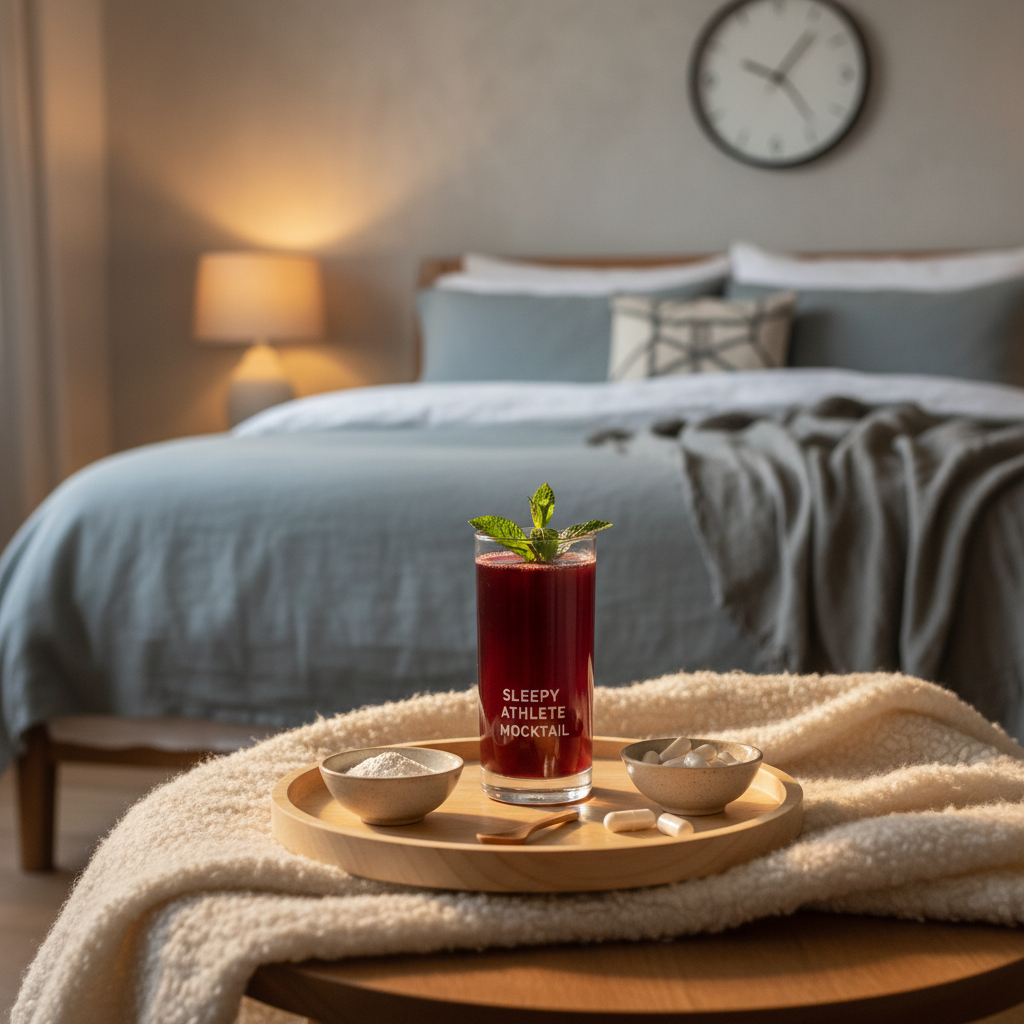
The Strategy: Mix 3 grams of glycine powder into water or herbal tea before bed.
B Vitamins
B Vitamins are crucial for energy production. They help convert food into fuel.
The Strategy: Take a high quality B Complex in the morning. This supports energy levels during the day and helps combat that daytime grogginess.
Taurine
Taurine is an amino acid that supports GABA activity in the brain. GABA is a neurotransmitter that promotes calmness.
The Strategy: Taurine can be helpful in the evening to wind down, or during the day to support cellular hydration and calmness without sedation.
Acetyl L Carnitine
This amino acid supports mitochondrial function and energy production.
The Strategy: Take it in the morning to support mental clarity and focus when you are fighting through brain fog.
Accelerating Recovery
You have landed. You are following the light protocols. You are taking your supplements. How do you recover as fast as possible?
The Power Nap Rule
If you are exhausted during the day, you can nap. But you must be strict. Set an alarm for 20 minutes.
If you sleep longer than 20 minutes, you risk entering deep sleep. Waking up from deep sleep leaves you with “sleep inertia,” making you feel worse than before. Long naps also reduce your “sleep pressure,” making it harder to fall asleep at night.
Create a Sleep Sanctuary
Your hotel room needs to be a cave.
Dark: Use an eye mask or clip the curtains shut. Even a tiny sliver of street light can suppress melatonin.
Cool: Set the thermostat between 18 and 20 degrees Celsius. This mimics the natural temperature drop your body needs for sleep.
Quiet: Use earplugs or a white noise app to block out unfamiliar city sounds.
Be Patient With Your Performance
Do not expect a Personal Best on day one. Your body is allocating resources to realignment, not peak force production.
Give yourself 2 to 3 days of lighter training. Focus on mobility, technique, and aerobic work. Once your Sleep Score stabilizes and your Resting Heart Rate returns to baseline, you are cleared for maximum effort.
Conclusion: Own Your Recovery
Travel is a stressor, but it does not have to be a barrier. By understanding the biology of your circadian rhythm, you can mitigate the damage.
You monitor your training load. You weigh your food. You track your sets and reps. Why would you leave your sleep to chance?
Plan your travel protocol. Pack your sleep kit. Respect the biology. If you control the variables you can control, you will be ready to perform when it counts.
The difference between a sluggish session and a great performance often comes down to how well you slept three nights ago. Do the work in the dark so you can shine in the light.